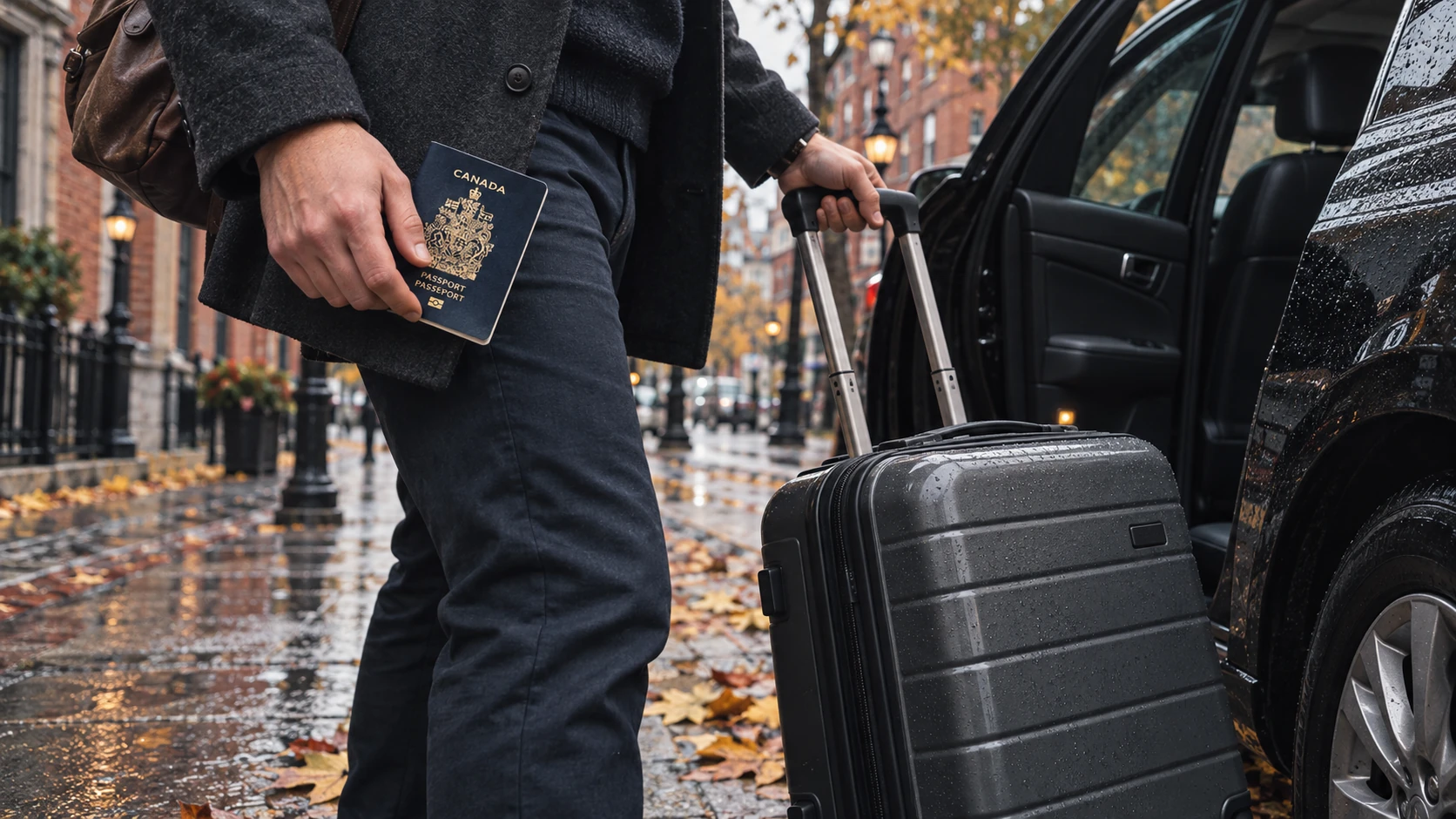
Packing can begin with a smaller question than “What should I take?” Ask what you expect to use during the hours between home and the next place. Think about the things you will reach for, the items you will put away again and the space you want to leave free.
This approach is about making your own bag understandable. It does not prescribe a perfect suitcase or a universal packing list. Start with the journey and your needs, then check the applicable rules before you close the zip.
Name the job of each item
Give each item a purpose: something needed to travel, something for personal comfort or something intended for later. If you are uncertain why an item belongs in the day bag, set it aside while you consider the route. The answer may be to pack it elsewhere or leave it at home.
Keep the first selection modest enough to review. A familiar object is not automatically useful on every journey. Equally, a personal need should not disappear just because it is absent from a generic online list. Build from what you expect to do.
Organise around the moments of use
Decide where you want to reach for confirmations, personal items and anything you expect to use while waiting. Put things back in those places as you rehearse the arrangement. A system only needs to make sense to the person carrying it.
Try lifting the bag, opening it and retrieving one item without emptying everything else. Adjust the layout if an important pocket is awkward to reach or if loose items spill into each other. This is an editorial packing exercise, not an airline size or weight check; the allowance still needs its own review.
Check security and baggage allowances separately
Two different questions apply: whether an item can pass screening and whether your bag meets the carrier’s allowance. CATSA’s carry-on guidance explains Canadian screening preparation. For ordinary non-exempt liquids, aerosols and gels, it specifies containers up to 100 ml/100 g, fitting together in one clear, closed, resealable bag up to 1 L.
Airline limits need a separate check. Pearson’s baggage guidance notes that requirements can differ across connecting flights. Read the allowance for your booking and ask the carrier about anything unclear. Neither the suitcase in a photograph nor another traveller’s bag establishes what your ticket includes.
Make room for personal needs
Set aside time to consider items that do not fit neatly into an ordinary packing list. For medication or medical equipment, use CATSA’s specific medical-item guidance and seek clarification about screening where needed. For international travel, check the relevant destination rules as well.
Keep any instructions you need with your preparation notes rather than relying on memory. Avoid turning an exemption into a broad assumption about every item. The useful result is an arrangement that respects your needs and the instructions applicable to the route, with unresolved questions still clearly marked.
Close the bag after a practical review
Lay out the items you intend to carry for one final look. Remove duplicate notes, put the current confirmations where you expect to find them and check that each closure works as intended. Keep any sensitive documents securely stored and easy for you to account for.
Then set the bag beside the rest of your departure plan. Packing belongs with the route, document review and confirmed arrangements; it does not replace them. A useful finishing point is being able to explain what is in the bag, why it is there and which items still require a rule check before you leave.
THE ORIGINAL INFORMATION
Keep the source close.
Official resources reviewed 12 October 2026. Open the responsible source for its current conditions and full instructions.